What Your Business Metrics Are Really Telling You
Sep 16, 2026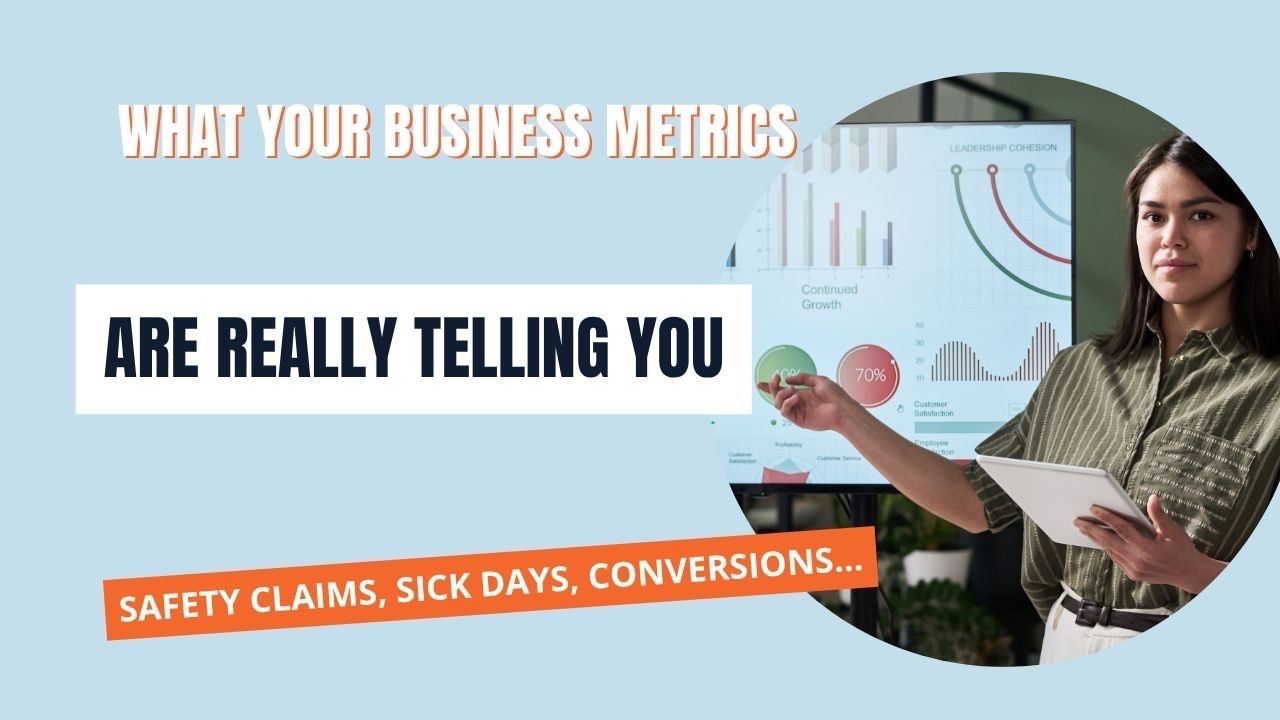
Every leader I sit down with wants to talk about the numbers. Staff turnover. NPS. Work health and safety claims. Sick days. Sales conversion rates. And they should. These metrics tell us whether we're on track or off track.
But here's what I keep seeing: most people never stop to ask where the number actually came from. They react to the metric. They don't go looking for the story behind it.
Great people don't leave companies. They leave managers.
We all know the pattern. A great employee joins a great business, drawn in by the brand, the opportunity, the value proposition. Then they end up working for a manager they don't feel connected to. Not listened to. Not respected. Taken for granted. And eventually, they leave — taking every dollar of recruitment and onboarding investment with them.
The vision wasn't wrong. The pay wasn't wrong. It was a people disconnect. Two people not aligned on a human level.
In 25 countries, working with leaders from small businesses to large enterprises, I've come to one conclusion: there aren't many genuinely bad managers out there. It's not an intent problem. It's that people don't understand how other people think, act, and what actually motivates them. And when someone does things differently to how we would, it's easy to fall into judgment instead of curiosity.
Your safety claims are a communication problem, not just a systems problem.
Here's one that surprises people. In Australia, roughly seven out of ten people are what DISC profiling calls “people-people” — high S or high I. High-S individuals in particular are conflict-avoidant. They'd rather let a safety breach slide than have an uncomfortable conversation about it.
Now picture a supervisor or site manager who is high S, without the awareness or the skills to have that conversation anyway. Every time they let something slide “just this once,” your business is one step closer to an incident. It's predictable. And it's preventable, but only if you build the emotional intelligence and conversational courage of the people on the front line, not just the paperwork behind them.
Account managers and business development managers need different things from you.
Account managers are typically high S — brilliant at looking after people, less inclined to proactively open up new opportunities within an account. Business development managers tend to run higher I and D, hunters who can default to pushing process and product instead of understanding the buyer in front of them.
Both groups leave value on the table for the same underlying reason: they haven't been equipped to read the person on the other side of the conversation.
Your conversion rate is telling you whether people trust you yet.
If your win rate on quotes, proposals or tenders sits between 10 and 20%, that's not a pricing problem or a product problem. It's a sign that people haven't felt fully engaged by you or your offer. Buyers decide with feelings first and logic second, every time — however much we'd like to believe otherwise.
The businesses I work with that get this right don't run 10–20%. Many sit at 40, 45, 50, 65%. Some — even on competitive tenders, without being the cheapest — convert at 95%. That's not luck. That's the science of how people engage with people, applied deliberately.
Start with self-awareness, not more process.
Whether it's turnover, safety claims, absenteeism or conversion rates, the fix starts the same way: recognise the pattern, get honest about it, and trace it back to the root cause rather than patching the symptom. Once you do, the metrics move together. Turnover down, safety incidents down, NPS up, conversion up. They're all connected, because they're all about the same thing: how well your people understand and engage each other.
That's the work we do with senior leaders through Communication Mastery. It starts with looking at your metrics differently.
