
Psychological Bid Engineering: Why Technically Brilliant Bids Keep Losing
Sep 16, 2026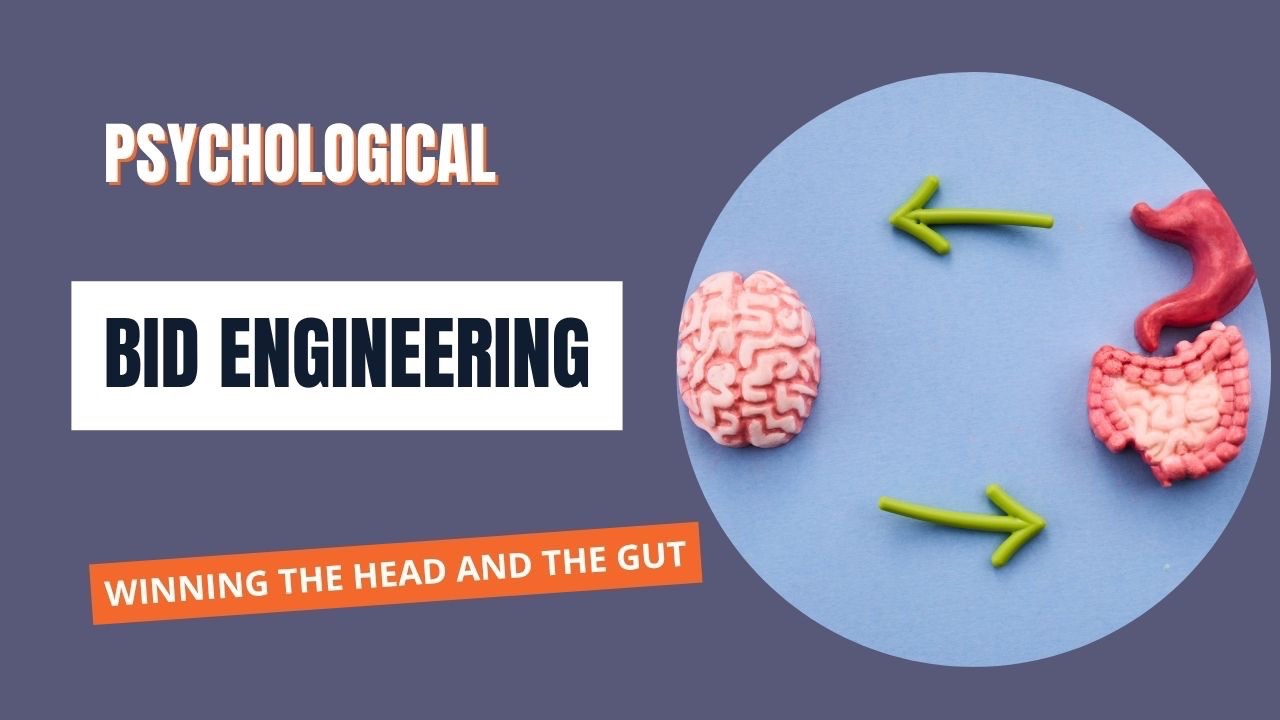
I want to tell you about a pattern I've now seen enough times to trust it. Most recently, inside an international engineering and automation business — global footprint, blue-chip industrial clients, as technically capable as anyone in their sector.
It showed up from two directions at once, and both teams were doing what felt completely reasonable to them.
Marketing built beautiful materials. Strong brand imagery, a polished style guide, genuinely appealing work. It landed well internally — everyone in the room nodded. What nobody had checked was who was actually sitting on the other side of the table. The buying committees this business was pitching to skewed heavily toward exactly the profile you'd expect in industrial and technical procurement: analytical, detail-driven evaluators, cautious operations stakeholders worried about disruption, and a decision-maker — often a CFO or a business owner — who wanted the bottom line, not the brand story. The materials that felt most “on brand” internally were, for a lot of that room, the least persuasive thing in the pack.
Now flip it. The engineering side of the same bid process produced exactly what you'd expect from a team that takes rigour seriously: comprehensive, accurate, dense technical content. To the analytical evaluator, that landed perfectly — that's their whole job, and they respected it. But to the operations stakeholder picturing what this does to their next six months, or the decision-maker who wanted the outcome up front, it read as something to wade through before the actual point arrived. Both halves of that bid pack were built with real skill. Neither half was built for the room it was walking into.
Here's the concept I use to explain why, and the one I'd want every technical bid team to walk away with: every bid evaluation produces two kinds of yes, and you need both. There's the yes that comes from the spec sheet — the logical yes. The numbers stack up, the methodology's sound, the technical evaluator can defend this choice to their own boss on the facts. That's the yes engineering-led teams are extremely good at earning, and should never stop earning. Then there's the yes that comes from the gut — the emotional yes. This team gets it, I trust them, I can picture working with them. That yes comes from whether the document, and the people behind it, made the stakeholder feel understood. Win only the logical yes and you've built half a bridge — technically flawless, and it doesn't reach the other side.
I call the discipline of deliberately engineering for both of those, in the same document, calibrated to the specific people reading it, psychological bid engineering. It starts with a stakeholder engagement board — mapping every role on the committee, their likely DISC style, what a win actually looks like for them personally, and which proof point speaks to that. Then it comes down to three things, and only three things, worth deliberately mirroring: pace, priority, and language. Language is the one that quietly wrecks the most bid documents, because it's invisible until someone points it out. C language is factual and risk-averse — audit, compliance, assessment, rigour, procedure, process, objective. I language is the opposite register — engaging, transformative, inspiring, uplifting, amazing. A document that's pure C language, cover to cover, doesn't just fail to excite a relationship-driven stakeholder. It reads as cold, clinical, sterile — even to a D or an S sitting in the same room.
Structured well, the same DISC logic tells you what actually belongs in the document itself: an executive summary with the investment and ROI up front for your D, colour and real client stories for your i, the whole process and how the people side gets handled for your S, and the full facts, figures and terms for your C — including only the sections that match the committee you actually mapped.
Get this right and it compounds. Organisations I've worked with on exactly this have pushed bid win rates beyond 40%, and in some cases as high as 95%, once winning stopped being accidental and started being engineered.
Technical brilliance gets you into the room. On its own, it only ever earns half the yes you need. If you've got a bid pack that reads beautifully to your own team and you're not entirely sure how it lands with the people evaluating it, book a free discovery call here and we'll look at exactly where the gut yes might be quietly missing.
