CRM Adoption: Turning a System into a Sales Asset
Jun 23, 2026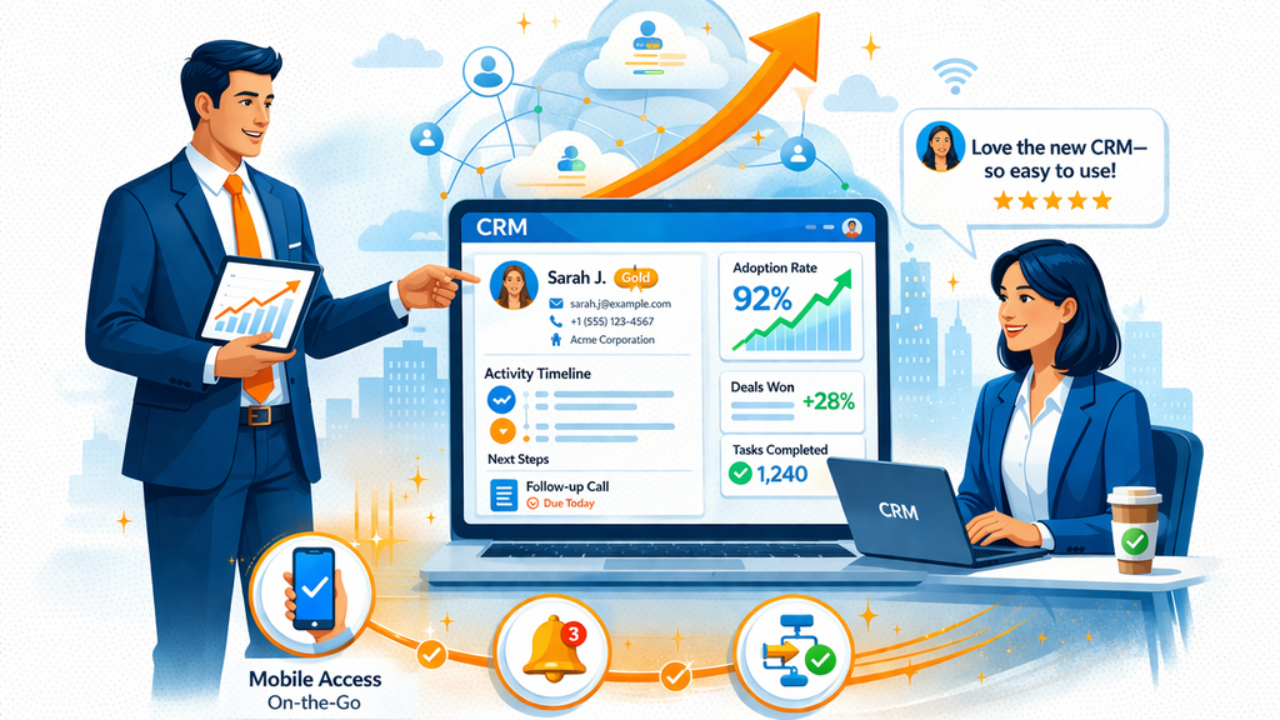
Many businesses invest heavily in CRM systems and then wonder why the return feels underwhelming.
The problem is rarely the software alone. More often, it is poor adoption. The platform exists, but usage is inconsistent, data quality is patchy, reporting is unreliable, and salespeople see the system as admin rather than advantage.
That is a costly missed opportunity.
When adopted properly, a CRM can become one of the most valuable assets in the sales organisation. It improves visibility, supports forecasting, tracks customer interactions, strengthens pipeline management, and helps leaders make better commercial decisions. It also creates a stronger foundation for automation and AI-enabled efficiency.
The challenge is getting the system embedded into daily behaviour. That requires more than training once and hoping for the best. Leaders need to ensure the CRM fits the sales process, supports the team’s workflow, and is used consistently enough to become trustworthy.
Adoption improves when people can see the value. If the CRM helps salespeople stay organised, follow up effectively, prioritise better, and close more business, engagement rises. If it feels like a compliance exercise for management, resistance remains.
Strong CRM adoption also depends on leadership discipline. Managers need to use the data, coach from the data, and hold standards around data quality and usage. When leaders ignore the system, the team usually follows.
Technology should make selling easier, not harder. With the right structure, integration, and expectations, CRM becomes more than a database. It becomes a strategic commercial tool.
Contact us to discuss how Lagrou Partners can assist you.
